
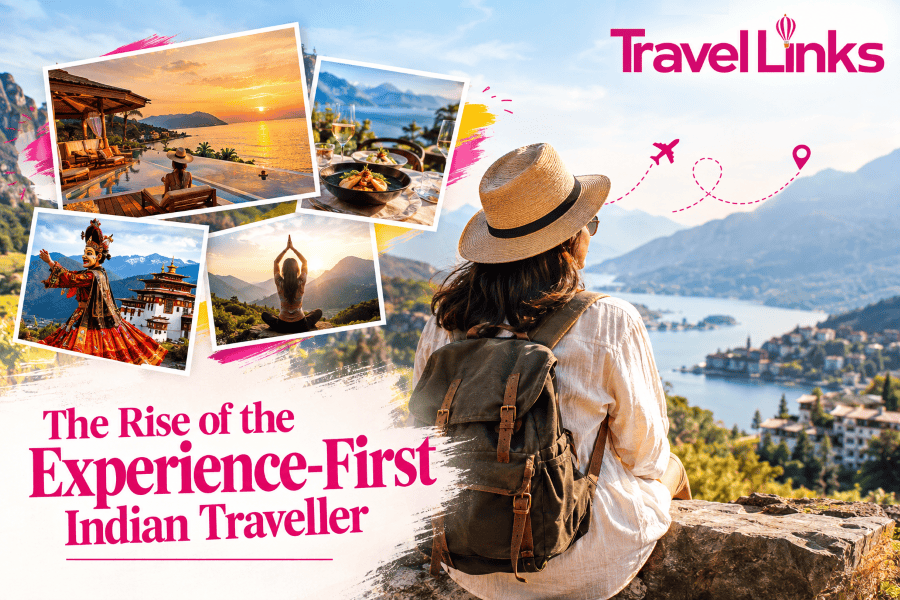

The Rise of the Experience-First Indian Traveller
Luxury is no longer about where you go. It is about how deeply you experience it.
There was a time when travel was measured by destinations covered, iconic landmarks visited, and photographs collected. Paris meant the Eiffel Tower, Dubai meant the Burj Khalifa, and Switzerland meant snow-capped mountains. For many Indian travellers, an international holiday was an opportunity to see as much as possible in the shortest time.
That mindset is changing.
In 2026, the conversation around Indian luxury travel is shifting from destinations to experiences, from elaborate itineraries to meaningful encounters, and from conspicuous luxury to something far more personal. Today’s discerning Indian traveller is increasingly interested in what a journey offers beyond the usual sightseeing.
What makes a holiday memorable? Is it an extraordinary hotel, a private cultural encounter, a wellness retreat, a meal prepared with local ingredients, or simply the opportunity to disconnect and slow down?
To understand this evolving mindset, I, Payal Sahni, Editor and Publisher of Travel Links, interacted with hospitality leaders, tourism specialists, travel industry professionals and experience curators. Their perspectives reveal how experiential travel is influencing India’s luxury tourism landscape and how the industry is responding to a traveller who increasingly values authenticity, personal connection and lasting memories.
From destinations to emotions: redefining luxury travel
The meaning of luxury is being reinterpreted. While exceptional accommodation, personalised service and exclusivity remain important, today’s luxury traveller is also looking for emotional connections and experiences that cannot easily be replicated.
Utsa Majumder, General Manager at OZEN Villas Jaipur, captures this shift:
“Luxury is no longer about where you go. It’s about how deeply you feel it. True luxury has transcended the miles travelled and the coordinates chosen. It is found in the intimacy of a moment that echoes, a sensory experience that stays, and the soul-deep certainty of being right where you belong.”
This idea of emotional luxury is echoed across the hospitality sector, where the emphasis is increasingly on creating experiences that connect guests with their surroundings rather than simply offering premium facilities.
Ajoy Biswas, Cluster Hotel Manager at The Pavilions Himalayas – The Farm and Lakeview, highlights the growing relationship between sustainability, wellbeing and meaningful travel.
“Luxury travel today is evolving into something far more meaningful than lavish stays or iconic destinations. Modern travellers are increasingly drawn towards eco-conscious living, sustainable hospitality, and authentic experiences that connect them with nature and local communities. At The Pavilions Himalayas – The Farm and The Pavilions Himalayas – Lakeview, we witness guests appreciating experiences rooted in organic farm-to-table dining, mindful wellness, environmental responsibility, and the simple luxury of slowing down amidst nature. The future of luxury lies in creating deeper emotional connections through sustainability, wellbeing, and purposeful travel.”
For destinations and travel brands, the implication is significant. Luxury is no longer defined exclusively by premium infrastructure. It is also about the depth, character and individuality of the experiences being offered.
Neeti Sharma, Director, Intrepid Marketing and Communications, views authentic experiences as an increasingly important differentiator for destinations.
“The Indian traveller today is not just chasing destinations; they are chasing meaning and experience. They want to feel genuinely connected to the place, its people, and its rhythms. This is where depth of experience becomes a competitive advantage. The more layered and authentic a destination, the more irresistible it becomes.”
Ravi Gosain, President of the Indian Association of Tour Operators (IATO), also observes the growing preference for experiential and personalised journeys.
“Today’s Indian traveller is increasingly experience driven rather than destination driven. Luxury is no longer defined only by 5 star hotels or expensive itineraries, but by authentic, immersive and meaningful experiences, whether it is wellness, culture, adventure, spirituality, local cuisine or personalized journeys. Indian travellers today want emotional value, exclusivity and memorable stories from their travels. This shift is redefining the tourism industry globally and creating new opportunities for experiential and sustainable tourism.”
These perspectives point to a broader evolution in Indian luxury travel. The value of a holiday is increasingly measured not simply by the number of places visited, but by the richness of the experiences and the memories travellers bring home.
Rediscovering India and the appeal of meaningful journeys
The shift towards experiential tourism is not necessarily about travelling farther. In some cases, it is about looking closer at destinations that travellers may have overlooked or experienced only superficially.
Shoba Rudra of The RARE Collection believes Indian travellers are rediscovering the richness of India and the wider subcontinent after years of exploring international destinations.
“Indian travellers are moving in layers. So it’s difficult to speak in absolutes. It reminds me of my first spiritual lesson – ‘not this!’ Till you tap into your calling. The Indian traveller after travelling overseas to all the aspirational destinations is re-discovering India. And India of myriad experiences. Add Nepal, Bhutan to this list in the subcontinent. This could be driven by nostalgia or a true willingness to see lived and living experiences.”
This rediscovery is particularly relevant for India’s diverse tourism landscape. From heritage stays in Rajasthan and village experiences in the Northeast to wildlife lodges, spiritual retreats and immersive culinary journeys, the country offers an extraordinary range of experiences for travellers seeking something beyond conventional sightseeing.
Neighbouring destinations such as Nepal and Bhutan also offer opportunities for culturally immersive, nature-led and mindful travel.
Dorji Dhradhul, Sustainable Tourism Specialist, Bhutan, offers a concise perspective on the changing definition of luxury:
“The new luxury traveller seeks not spectacle, but significance, journeys that inspire mindfulness, connection, and lasting meaning.”
This distinction between spectacle and significance is central to the experience-first travel movement. It also reflects the growing relevance of slow travel, cultural immersion, and sustainable tourism in the luxury segment.
Deepa Misra Harris, Founder, BrandsWeLove LLP, sees this transformation as a move from status-driven consumption to personal enrichment.
“India’s new luxury traveller is increasingly motivated by emotion, meaning and immersion rather than the usual sightseeing. Today, memorable travel is more intentional. It is defined by transformative experiences — whether through discovery, culture, celebration, adventure or rare access — that creates a deeper personal connection and lasting recall. Luxury as we know it is shifting from ownership to enrichment, and from status to storytelling.”
The emphasis on storytelling is particularly significant. Travellers increasingly want to return with stories of people they met, traditions they experienced and places that offered a different perspective. Such encounters give destinations a distinctive identity and create a more enduring relationship between visitors and the places they explore.
Lubaina Sheerazi, Co-Founder and CEO, BRANDit, points to the more informed and experience-conscious nature of today’s Indian traveller.
“The Indian traveller is changing in a very visible way. They are researching more, asking sharper questions, and choosing holidays that offer more than a well-planned itinerary. Food trails, local neighbourhoods, nature-led stays, wellness breaks, festivals, and hands-on cultural experiences are no longer add-ons; they are becoming part of the decision itself. For many travellers today, the true measure of a holiday lies in how intimately it lets them experience a place, not simply in how much ground they cover. Luxury today is less about excess and more about access- to places, people, stories and moments that stay with you. Today’s luxury traveller is no longer just chasing destinations; they are seeking experiences that help them feel a place more deeply, whether through local culture, hidden stories, nature, wellness, or simply the time and space to be fully present. The most meaningful journeys are the ones that remain with you long after you have left.”
Her observations underline an important shift in the travel decision-making process. The experience itself is increasingly becoming a reason to travel, rather than an additional feature of a destination-led itinerary.
The rise of slow and intentional travel
Speed is no longer the only measure of a successful holiday. Increasingly, depth is taking precedence over distance.
Instead of covering multiple European cities in a short trip, travellers may choose to spend a week exploring Tuscany, immerse themselves in the culture of Japan or retreat to a wellness property in Bali. The appeal lies in having the time to understand a destination rather than simply passing through it. This is the essence of slow travel: fewer destinations, longer stays and more meaningful engagement with local life.
For Indian luxury travellers, this approach also creates room for more personalised itineraries. A leisurely countryside escape, a guided heritage walk, a local cooking experience or an extended stay at a boutique property can often offer a more memorable holiday than a tightly packed sightseeing schedule.
For travel companies and destination marketers, this evolution calls for a different approach. Selling a destination is no longer enough. The focus is shifting towards curating journeys around interests, motivations, and individual preferences.
Hospitality’s new role: from a place to stay to an experience in itself
Hotels and resorts are increasingly becoming an integral part of the travel experience rather than simply serving as accommodation.
Private villas with personalised dining, boutique heritage hotels with local storytelling, nature-led resorts, wellness retreats and design-driven properties are responding to the demand for distinctive stays.
In India, this shift is particularly visible in the growing appeal of boutique heritage properties, forest lodges, experiential resorts and thoughtfully designed retreats. These properties often offer something beyond conventional hospitality: a sense of place, a connection with local culture and opportunities to experience the destination in a more intimate way.
For luxury hospitality brands, the challenge is to create experiences that feel personal without appearing overly curated. Guests want seamless service, but they also want spontaneity, discovery and genuine human interaction.
The future of luxury hospitality will increasingly depend on how successfully hotels combine comfort, authenticity, personalisation and a strong sense of identity.
Food and culture: the new reasons to travel
Food has emerged as one of the most engaging ways to understand a destination.
From vineyard visits and regional food trails in Europe to street-food explorations in Southeast Asia and farm-to-table dining in India, culinary experiences are increasingly influencing travel decisions.
A meal can reveal a region’s history, geography, agricultural traditions and cultural influences. A visit to a local market, a cooking session with a regional chef or a traditional meal in a family home can offer insights that conventional sightseeing often cannot.
Cultural immersion is following a similar trajectory. Travellers are showing interest in traditional crafts, local festivals, heritage walks, performing arts and interactions with local communities.
For destinations, this presents an opportunity to move beyond familiar promotional narratives built around landmarks and attractions. The emphasis can instead be on experiences that reflect the distinctive character of a place.
The more authentic and locally rooted these experiences are, the greater their potential to create a lasting impression.
Wellness travel: when wellbeing becomes the ultimate luxury
Wellness has moved well beyond the traditional spa holiday. It is now an increasingly diverse segment encompassing holistic retreats, mindfulness, nutrition, fitness, sleep-focused stays, nature-based experiences and digital detox programmes.
For Indian travellers, wellness journeys can combine luxury with a deeper interest in physical and emotional wellbeing. Himalayan retreats, Ayurveda-led stays, meditation programmes and nature-centred escapes are examples of experiences that bring together hospitality and personal enrichment.
The appeal of wellness travel also reflects a broader desire to step away from demanding routines and reconnect with oneself.
For luxury hospitality brands, this creates opportunities to integrate wellbeing into the entire guest experience, from food and sleep to outdoor activities, spa treatments and mindful design. The defining feature of wellness travel is no longer simply indulgence. It is the opportunity to return feeling restored.
Personalisation: the new language of luxury
Technology is changing how people research, plan and experience travel. Artificial intelligence, digital concierge services and data-driven recommendations are making it possible to tailor journeys to individual interests and preferences. Yet the real opportunity lies in combining technology with human understanding.
Luxury travellers do not simply want efficient bookings or automated recommendations. They want experiences that reflect their personalities, interests and expectations. Whether it is a specially curated itinerary, a preferred dining arrangement, a private excursion or a thoughtfully anticipated personal detail, the objective is to make the guest feel recognised.
For travel advisors, destination management companies and hospitality brands, personalisation is becoming an important part of delivering meaningful luxury. The challenge is to use technology to enhance the human element of travel, rather than replace it.
The Indian traveller as a global force
India’s expanding outbound travel market is bringing new opportunities and expectations to the global tourism industry. With increasing international exposure, greater access to travel information and a growing appetite for distinctive holidays, Indian travellers are becoming an important audience for destinations and luxury hospitality brands worldwide.
Their preferences are diverse. While some continue to prioritise iconic international destinations, others are exploring niche experiences, adventure travel, wellness retreats, cultural immersion and exclusive access.
There is also a growing interest in discovering destinations closer to home, including lesser-known Indian regions and neighbouring countries.
This diversity makes it difficult to define the Indian traveller through a single profile. Age, spending power, family structure, travel experience and personal interests all influence holiday choices.
For the travel industry, understanding these differences is essential. The opportunity lies in moving away from standardised offerings towards journeys that respond to individual motivations.
The experience-first traveller is not necessarily looking for the most expensive holiday. The emphasis is increasingly on value, exclusivity, authenticity and the personal significance of the experience.
What lies ahead for experiential luxury travel?
The evolution of Indian luxury travel presents an important opportunity for tourism boards, tour operators, hospitality groups, travel advisors and experience curators.
Destinations will need to look beyond conventional marketing and communicate what makes their experiences distinctive. Hotels will have to create stronger connections with their surroundings and communities. Travel companies will need to develop itineraries that allow for greater flexibility, discovery and personalisation.
Sustainability, wellness, culinary discovery, cultural immersion and slow travel are likely to remain important themes in the continuing evolution of experiential tourism.
However, the industry must also recognise that the Indian travel market is not homogeneous. Traditional luxury, family holidays, destination celebrations, adventure and experiential journeys will continue to coexist. The challenge is to understand where these preferences intersect and how travel products can evolve accordingly.
My conversations with industry specialists reveal a common thread: the meaning of luxury is expanding. Beyond premium accommodation and exclusive access, there is increasing attention on the emotional value of a journey, its connection with local culture and its ability to create lasting memories.
For Travel Links, this shift also opens up a wider editorial opportunity. Travel journalism can go beyond showcasing destinations and hotels to explore the people, ideas, experiences and changing aspirations that are shaping the future of travel. Because ultimately, the most memorable journeys are not always the ones that take us the farthest. They are the ones that leave us with a different perspective, a meaningful connection or a story worth telling long after we return.
About Travel Links
Top 5 Travel Trade Travel luxury Magazine Travel Links
USP: Original content, experience-driven narratives, sustainable luxury, national and international coverage. At the forefront of Indian travel media, Travel Links Magazine has emerged as one of the Top 5 travel trade magazines in India, and arguably, the most original. Known for its authentic experience based content, and a keen focus on luxury with a conscience, Travel Links delivers curated content that speaks directly to modern travellers.